


People First: The Secret to Successful Change Management
In our fast-paced world, managing change is as much about the people as the process. It’s important to have a good roadmap and it’s equally important to ensure people feel seen and supported. That’s what it takes for change to stick.
At ASG, we’re including people in the process as we introduce a new engineering methodology, Model-Based Systems Engineering (MBSE). We’re ensuring people understand why change is happening, what it means for them and how they can help contribute. There’s no one-size-fits-all in terms of how people are going to embrace change, and the goal is to help people move from uncertainty to ownership.
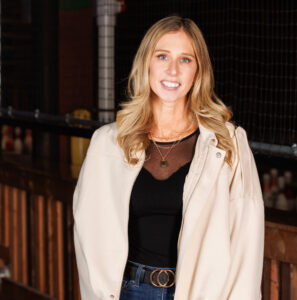
Meagan Koeneman, who leads ASG’s business development and marketing efforts, believes managing change is fundamentally about supporting people. I recently talked to her about ASG’s agile approach to the operational and emotional aspects of change as the company adopts MBSE.
She shared five key ways.
1. Get everyone on board.
People are more likely to adopt change when they understand how it helps them. To do that, it’s important to show team members how a new process reduces confusion and supports decision making, both their own and others’. “When the new way of doing things becomes a support mechanism, it’s easier to embrace,” Meagan said.
When the new way of doing things becomes a support mechanism, it’s easier to embrace.
For example, MBSE centralizes system data and will move us to shared understanding. MBSE reduces ambiguity, strengthens decision making and enhances our ability to break down complexity for our own team and our clients. “Some resistance is natural, but you earn more buy-in if you can encourage people to see change as something that will help them do their job better rather than just telling them you’re reinventing the wheel,” Meagan said.
2. Start small.
Complex transitions, like MBSE, require time, training and patience. Start with small, manageable steps. “Be mindful not to inundate people with a huge jump,” Meagan said. “Be there to connect the dots for them.”
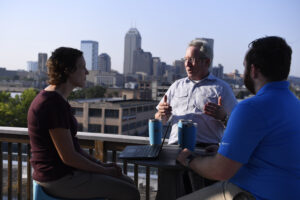
For example, we’re sending groups of people to training instead of sending everyone at once. “The first group will know its purpose and the basic principles, and they can share what they’ve learned with others,” Meagan said. They’ll take some lessons from the first group and tailor them for the next group. “Then we’ll repeat that cycle, adjust as we go and build momentum gradually,” she said.
3. Offer empathy and clarity.
For many engineers, moving from document-based workflows can feel like learning a new language. It’s important to acknowledge that new habits take time to develop — just like training for a marathon. “Everyone is building new habits,” Meagan said. “We need to be patient with ourselves and others.”
Everyone is building new habits. We need to be patient with ourselves and others.
Transformation takes time. “It’s essential to remind people that everyone’s pace will look different, and that’s okay. What matters is that we’re moving forward together,” Meagan said.
4. Create space for “failing forward.”
Sometimes failure is a powerful learning tool. “At ASG, we give people room to try things and fail,” Meagan said. “We want to create safe spaces where people can bring both their struggles and successes to the table. So they can say, ‘Yes, I made a mistake, and I can go in a different direction and try again.’”
When people feel safe to fail, they also feel empowered to improve. MBSE itself encourages evolution. An early model may not “work,” but it isn’t a failure. Early model iterations can reveal hidden gaps in requirements, architecture or system interactions — that’s how we validate assumptions and strengthen the design.
5. Celebrate the small wins.
 Celebration doesn’t require a big party, it requires intention. “When people can see the bar moving, they’re motivated to keep going,” Meagan said. She suggests taking a moment in a meeting to spotlight progress or acknowledge someone’s efforts. Recognition helps people feel like progress is being made and reinforces the change is working.
Recognition helps people feel like progress is being made and reinforces the change is working.
“They can move the bar rather than wondering if they ever got to the bar,” said Meagan.
We’re excited about the future at ASG. Change is coming, and we’re ready for it. As we grow, we’re here to help our partners navigate change with confidence, too. Learn more about ASG and contact us.