


Doing the Good Work
A Q&A with ASG Materials Manager Tyler Bouslog
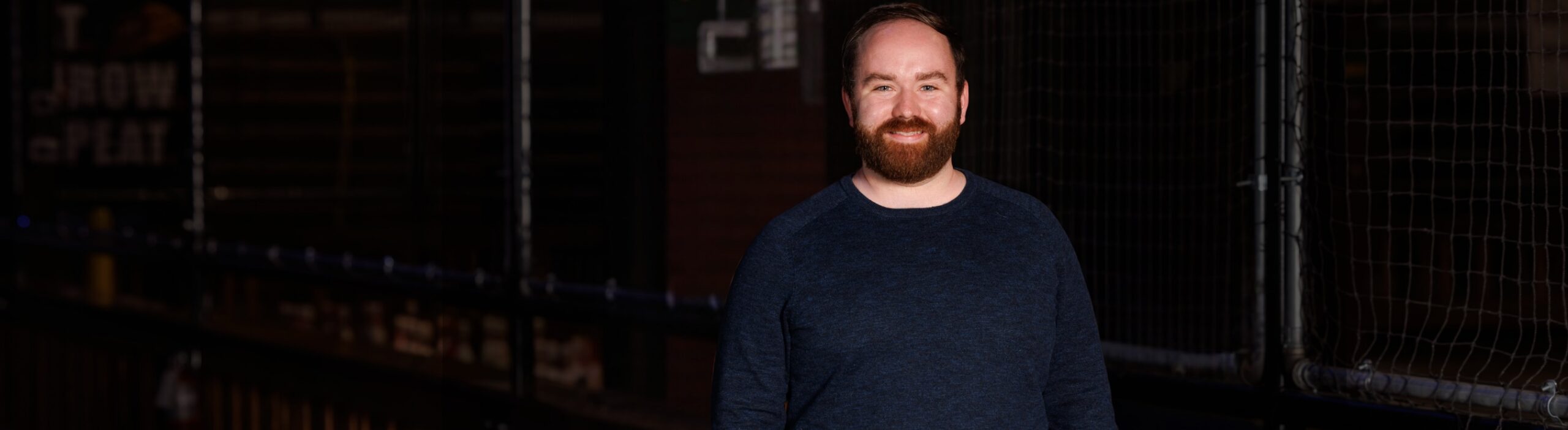
ASG is a company that places a high value on service, and it’s easy to see in the people who work there. Take Tyler Bouslog, for example. The seven-year ASG veteran has turned his materials manager role into a leadership role. Tyler’s dedication to service extends to clients and the team he leads. It’s also a value he honors in his personal life. Read on to learn about this dedicated father, husband, brother and employee.
What’s your background in the supply chain field?
I learned a lot about materials management during my time at Kimball Electronics, a global manufacturing company. Even though I was a buyer, I shared a 12-by-6-foot cubicle with a mechanical engineer. Sitting back-to-back all day, I observed his perspective, his needs and the reasons behind his feelings. That understanding helped me think about how to stay on track and avoid timeline delays. It led to stronger skills: building better timelines and meeting client goals in my job today.
What do you do for clients as a materials manager?
I help them work through the kinks of getting the materials they need for their devices. I look at when they need materials, how they need them and what it costs. This work is the first step to ensuring a successful project, because supply chain affects every piece of business down the line. Some people say supply chain is the forgotten part of business. Finance, marketing and risk management take center stage on projects, but if you can’t get materials from place to place in the way you need them and at the cost you need them, then none of the downstream activities can take place.
The key to solving a client’s problem is understanding that delicate balance between what the client needs and when they need it.
It sounds like you also practiced your listening skills. Tell me more.
People tend to gravitate toward what’s familiar. For example, commercial inventory is often a client’s preferred material, but that isn’t always available. When that happens, I ask questions to get people thinking, like: “If you really need this brand of component, you’ll have to wait for six months, but if you can settle for this, I can get it to you in two weeks.” The key to solving a client’s problem is understanding that delicate balance between what the client needs and when they need it.
Tell me about a project you’re excited about.
A recent project and probably one of the most fulfilling is the supply chain management work I’m doing for an autoinjector project. An autoinjector pen is like an Epipen or insulin pen. These types of syringes are pre-filled with drug dosages. I work with the manufacturer to get a timeline for when we can expect filled cartridges, and I order the cartridges and packaging. Before that can happen, I work with my team to compare the demand plan to the client’s schedule and when we need to get parts from the original equipment manufacturer or contract manufacturer.
This work is fulfilling for me because it’s complex. For example, this project includes over 10 projects under the same umbrella. We’re juggling different manufacturing sites. I’ve found ways to carry over waste between the projects. Waste can mean plastic parts and extra syringes or cartridges. I manage the logistics to transfer that inventory, which is something that hasn’t been done well in the past. A lot of other client projects don’t involve complicated problem-solving like that.
You were recently promoted to a leadership role. How do you like it?
I’ve always wanted to help the team in any way I could, so I’m happy. My day-to-day life hasn’t changed since I became a team lead, except I’m more vocal in pointing out ways for the team to grow and strengths for them to lean on. I also have more paperwork. (Laugh.) My team is great. We have four materials managers and two schedulers. Tasha Crane, Tom Green, Zach Labins and Brian Majava are materials managers. Tim Oduremi and Casey Baker are schedulers. We learn from each other; each day we’re growing individually and finding balance between our roles and projects.
What fills your cup outside of work?
My 5-year-old daughter, Blake. She’s going into kindergarten this fall. Every day, something new happens. She’s learning how to ride a bike now. She’s awesome and crazy smart. If I’m not working, I’m spending time with her. Blake has always been my sidekick.

My wife, Sarah, keeps the wheels on our family life. She’s the director of equestrian team programming at Saint Mary-of-the-Woods College. I’ve never seen somebody work so hard at something. It’s really cool to see. She’s taken a student to nationals again this year. I couldn’t be more proud of her. And Sarah’s love of animals has passed down to Blake. It’s funny; Blake is at that age where she’s super interested in what she wants to be when she grows up. It’s never, “I want to do what Daddy does,” but always, “I want to do what Mommy does.” She thinks I just talk to people on the phone all day. That doesn’t sound as fun as working with horses!
Has becoming a father helped you become a better leader?
I take more time to think about how I communicate now. I think more about how I want to react to things and how I want to do things. And when I realize I have to take a step back and practice what I encourage my five-year-old to do — take a big breath and think it through before I say or do something — it helps me build trust with the people I’m working with.

Tell us about your volunteer work with your college fraternity. Is there a story behind that?
I was chapter vice president at Pi Kappa Alpha (Pike) in undergrad at Indiana State University (ISU). They always preach, “It’s a lifelong commitment.” When you’re 19 years old, you kind of roll your eyes at that. Then when I was 21, my dad passed away. As I was standing in the receiving line at the visitation, 35 to 40 fraternity advisors came through.
I thought, “Oh, these guys don’t have to be here, but they chose to be.” And then I thought, “Well, if these 60-year-old men are willing to do this for me, I can do it for the next generation.” So when I graduated, I decided I was going to continue volunteering with the chapter and try to be there for the undergraduates the way our advisors were for me.
So, how did you pay it forward?
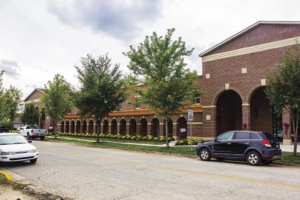
Greg Goode, who was our housing corporation president at the time, asked me to run to replace him as he was gearing up for his state Senate run, and the rest is history. Greg became a state senator for Indiana, and I became our housing corporation president. I’ve been in the role for five years now. We own, maintain and operate a $7 million property, which includes an apartment building and education center.
What are some things you do for the students?
We’re trying to give these guys the best experience we can. We’re working on a major capital campaign, trying to raise $3 million to expand the house. In the last three years, we built a custom gym for them in the basement of the house. We’ve had the primary decorator for the Marshall Fields building in Chicago doing our Christmas decorations. We’re going to build a museum dedicated to the chapter’s history. We’ve been able to do some really cool things. I find this work extremely fulfilling, and I think it makes me better both personally and professionally.
How does your volunteer work impact your work at ASG?
My volunteer work makes me a better team member because it exposes me to people with different personalities and backgrounds. It’s allowed me to improve my listening, organizational and communication skills, such as conflict resolution. Listening to people and taking care of students have a lot in common with the way I work with clients. I want people to have a good experience and understand what they need.
How does your involvement reflect ASG values?
I want to help these young men be accountable and learn life skills. It’s about relationships and giving back.
Learn more about ASG and what our great people, like Tyler, can do for you.
Photo of Pi Kappa Alpha chapter house at ISU courtesy of Statesman Photographer, ISU Student Media
ALL ABOUT TYLER
Hometown: Paris, Illinois
Education: B.A. in operation supply chain management and business administration from Indiana State University
Pre-ASG Career: Buyer at Kimball Electronics
Family: Wife, Sarah, and five-year-old daughter, Blake
How he met his wife: As children, Tyler’s older sister taught his wife, Sarah, to ride horses. Now she’s an equestrian coach.

When he’s not at work: As housing corporation president for his college fraternity, Pi Kappa Alpha (Pike) at Indiana State University, he manages a $7 million property and engages with alumni and college students.